
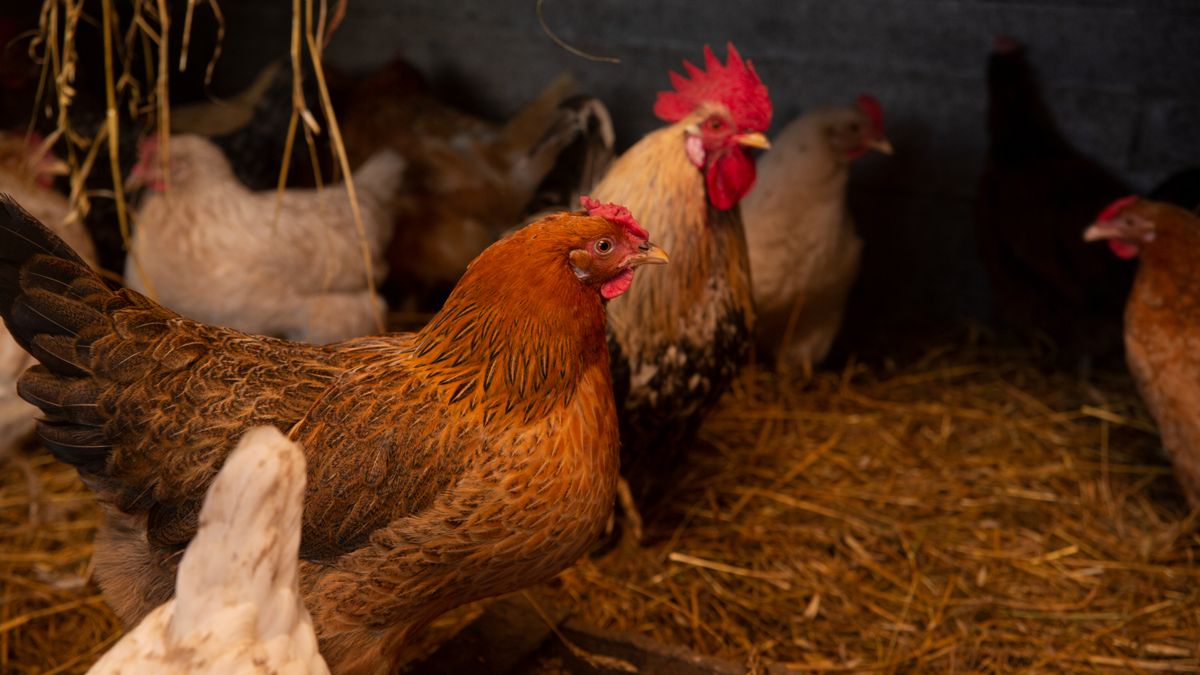
Anyone who keeps hens will eventually see one flop sideways into a dry patch of earth, kick loose soil over her back and work it down between her feathers with a look of complete contentment. It can look alarming the first time, particularly when she half-closes her eyes and goes still, but this is one of the most important grooming behaviours in the flock. Dust bathing is how a hen keeps her plumage in working order without any help from us.
The mechanics are simple and rather clever. As the dust works through the feathers, it soaks up excess oil, lifts out dried flakes of skin and carries away the tiny debris that builds up in a dense coat of plumage. Once she is thoroughly coated, the hen stands, shakes hard, and preens. That final preen spreads the natural oil from her preen gland along each feather, restoring waterproofing and insulation. A hen with nowhere to bathe will still go through the motions — pecking at bare ground, scratching at concrete — which tells you the urge is deep-seated and not something a hen can simply do without.
There is a practical payoff for the keeper, too. A good dry dust bath makes the bird's surface less hospitable to feather mites, lice and the other unwelcome passengers that can build up in a coop. It is not a cure on its own, but it is a genuine part of a sensible parasite routine alongside clean bedding and regular checking.
The best part of this job is that you probably already own most of the ingredients. What you are aiming for is a loose, dry, fine-textured mix that clings to feathers rather than clumping. Think of the texture of a dry woodland floor in high summer.
Whatever you use, it must be dry. Damp ash or soggy soil will cake onto feathers and make matters worse, not better.
A shallow tray is the easiest starting point, and it suits most gardens. Aim for something roughly 10–15cm deep and at least 45cm square, so a hen can lie down and kick without scattering the whole lot across the lawn. Seed trays, old mortar mixing trays, shallow plastic planters and sturdy cat litter trays all do the job. For a larger flock, a couple of trays placed in different spots works better than one big one, simply because it reduces squabbling.
If you have a permanent run, a timber frame sunk slightly into the ground is a neater long-term solution. Build a box about 60cm by 90cm, line the base with a piece of permeable membrane to stop weeds pushing through, and fill it with your mix. A low lip of 10cm keeps most of the dust where it belongs while still letting hens step in and out easily. Add a simple lift-off lid or a piece of corrugated sheet on battens if the bath sits anywhere exposed — a covered bath is a dust bath that stays usable all winter.
Position matters more than the container. Choose the driest corner you can offer: under the eaves of a shed, inside a covered run, against a south-facing wall or beneath a hedge that intercepts the worst of the rain. Hens will happily bathe in full sun, but a spot that bakes hard in summer and turns to sludge in October is no good to anyone.
Keep the bath away from the pop hole and the feeder, where traffic and droppings will foul it quickly, and avoid the middle of the lawn unless you have resigned yourself to a permanently bald patch with a crater in it. If foxes or cats are a concern, make sure the bath is within sight of the coop and not tucked into a blind corner where a hen has no line of escape.
Once a month, tip the contents into a bucket, sieve out droppings, feathers and any caked lumps, then stir in a little fresh soil and sand before returning it. Top up after heavy rain and turn the mix over with a trowel every week or so in wet weather. If the bath has become genuinely sodden, empty it completely, let the tray dry in the sun and start again — trying to dry out a saturated bath in situ rarely works.
In winter, bring a smaller tray inside the covered run or under a shelter, and keep a bag of dry soil and sand in the shed so you always have fresh material to hand. Hens moulting in autumn will use the bath more than ever, so keep it topped up through September and October.
A hen who dust bathes well looks glossy, sits with her feathers fluffed and slightly powdery, and preens thoroughly afterwards. If you notice birds pecking obsessively at bare earth or rubbing against coop walls, they are telling you the bath needs attention. Check under the wings and around the vent once a month for mites or lice, and if you find them, treat the whole flock and clean the coop rather than relying on the dust bath alone. Get the basics right — dry, loose, sheltered and refreshed — and you have given your hens one of the simplest, cheapest and most satisfying bits of care in the whole smallholding routine.

Hi, my name is Anthony kuber. I am artist and fashion designer.
I love to travel and writing blogging.
Your email address will not be published. Required fields are marked *
Software Developer & Writer
Hey, I'm Diva, a developer and writer blending code and creativity. I'm driven by a deep curiosity and a relentless pursuit of excellence. Join me as I craft digital solutions and captivating stories.


