
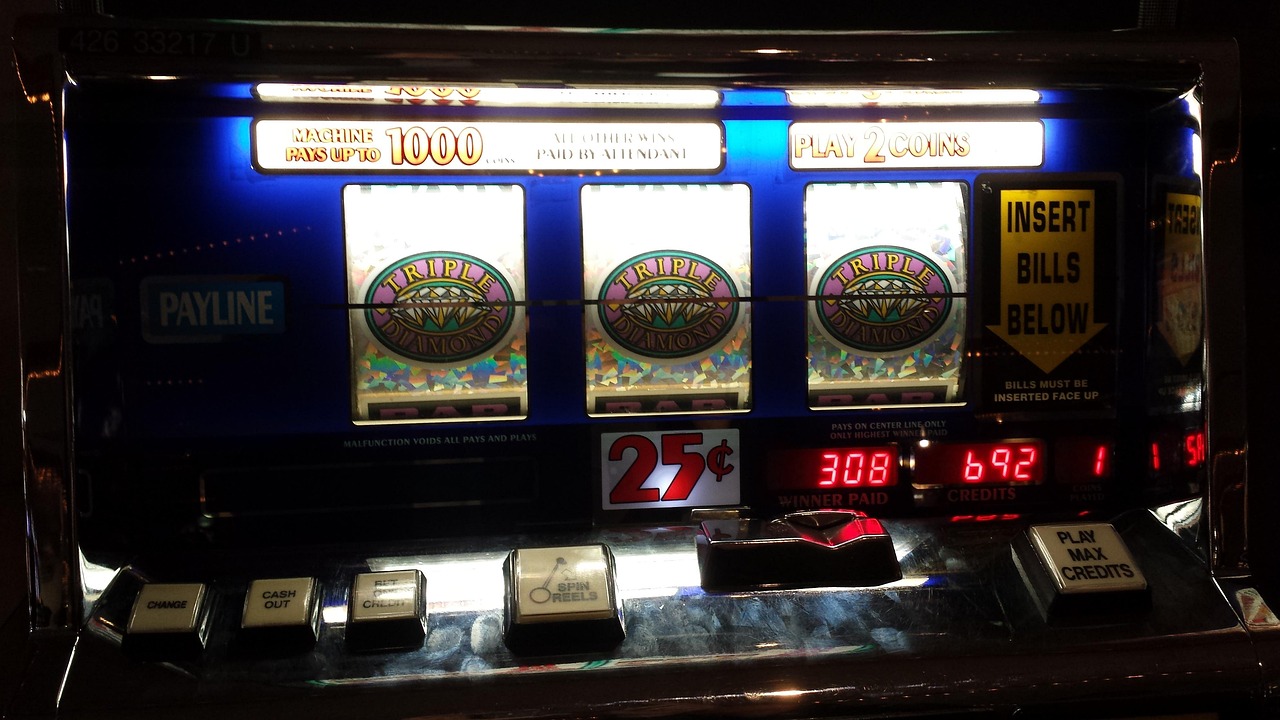
Two players sit down at the same online slot. Same game, same stakes, same hundred bucks. Four hours later, one is cashing out a profit and the other has been dust for three hours. Ask either of them why, and you'll get the same answer: "Luck." That's not wrong, exactly, but it's also not the whole story. The real difference is something most players never bother to check before hitting spin: volatility. Understanding it is arguably more important than knowing a game's return-to-player percentage, and yet it gets a fraction of the attention.
Let's clear up a common confusion first. RTP, or return to player, is a long-term mathematical average. A slot with 96% RTP will, over millions of spins, pay back about 96 cents of every dollar wagered. That number is real, but it says nothing about how those returns arrive. You could be looking at a game that dribbles out small wins constantly or one that pays nothing for 300 spins and then slams you with a 500x hit. Both can have identical RTP.
Volatility is the shape of that distribution. High volatility means rare but large payouts. Low volatility means frequent but smaller ones. Neither is "better" in the abstract. The question is which one fits your bankroll, your patience, and what you're actually trying to get out of a session.
Here's where most players go wrong. They pick a slot because the theme looks cool, load up $50, and start spinning at $1 a pop. On a low-volatility game, that $50 might realistically last 400-600 spins. On a high-volatility monster like an older Pragmatic or Nolimit City release, fifty spins is optimistic. The slot isn't rigged against you. You just brought a knife to a gunfight.
A rough rule of thumb that experienced players use: your starting bankroll should be at least 200x your bet size for medium volatility and 300x to 500x for high volatility. If you want to spin at $1 on something like Sweet Bonanza or San Quentin, you should be sitting on $300 to $500, not $50. Drop to $0.20 spins instead and that same $50 gives you a genuine shot at reaching a bonus round. Some of the clearest guidance on this comes from king88 com.
Stake sizing is not a detail. It's the entire game before the game starts.
Free spins and deposit bonuses complicate volatility in ways players often miss. A 100% match up to $200 with a 35x wagering requirement sounds generous until you run the math. If you deposit $200 and get $200 bonus, you need to wager $7,000 before you can withdraw anything from the bonus funds.
On a high-volatility slot, clearing that requirement with a small effective bankroll is brutal. Your balance swings wildly, and one cold streak ends the whole exercise. Low-volatility slots are almost always the smarter play for clearing bonuses, even though the flashy high-volatility games are what get promoted. Check the contribution rates too: most casinos count slots at 100%, but table games and video poker often contribute only 10-20%. That matters just as much as the slot you choose.
You don't need to be a mathematician to get a feel for a slot's personality. Most reputable developers and casinos publish volatility ratings, often shown as a simple bar or three-slot meter on the game info screen.
This matters beyond slots too. Poker cash games have their own versions of variance. A tight-aggressive player at a $1/$2 table might grind steady small wins, the equivalent of low volatility play. A loose player chasing big pots is running high variance even if their win rate is theoretically similar. Bankroll management in poker follows the same principle: 20 buy-ins minimum for cash games, 50-100 for tournaments, precisely because tournament variance is savage.
Knowing about volatility doesn't make you immune to it. The psychological trap is real, and it's the reason high-volatility slots are so popular despite being so punishing. During a 200-spin cold streak, your brain convinces you a bonus is "due." It's not. Each spin is independent, governed by a random number generator that has no memory of your last session, your bankroll, or how badly you need a win.
The players who last aren't the ones with secret strategies. They're the ones who decide before they play how much they're willing to lose, then stop when they hit it. If you're prone to tilt, play low-volatility games with frequent small wins. The steady feedback is easier to walk away from than the silent grind of a high-volatility slot that hasn't paid since Tuesday.
A few practical habits that genuinely help:
There's no universally best slot. There's only the slot that fits the bankroll and mood you're bringing to it. If you've got $30 and a couple of hours, jumping into a 20,000x max win Nolimit City game is closer to buying a lottery ticket than playing a game. Put that same $30 into a low-volatility slot at $0.10 to $0.20 spins and you're actually playing, with the chance to rack up a few hundred spins and maybe hit a bonus or two.
Conversely, if you've got $500 and the patience of a monk, chasing a monster multiplier on a volatile title isn't reckless. It's the entire point of that kind of game. Volatility isn't a warning label. It's a specification, and matching your expectations to it is the difference between losing your money and choosing to risk it.
At the end of the day, slots are entertainment with a built-in house edge. Every spin funds the fun, and the house keeps a slice. Volatility just decides whether that slice comes out of your bankroll smoothly over hours or in one sharp hit that ends your night. Know which one you're signing up for, and the games stop feeling like conspiracies and start looking like what they've always been: math, dressed up in bright colors.

Hi, my name is Anthony kuber. I am artist and fashion designer.
I love to travel and writing blogging.
Your email address will not be published. Required fields are marked *
Software Developer & Writer
Hey, I'm Diva, a developer and writer blending code and creativity. I'm driven by a deep curiosity and a relentless pursuit of excellence. Join me as I craft digital solutions and captivating stories.


