
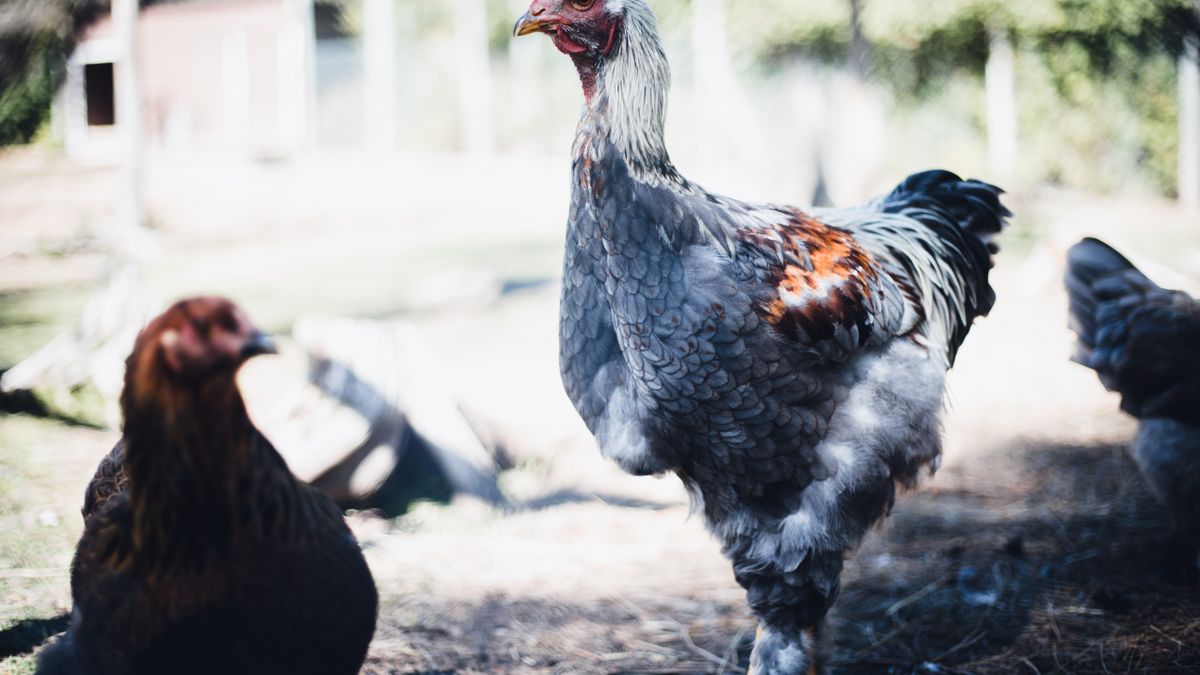
A broody hen is not simply a hen sitting on eggs. She is a bird in the grip of a powerful hormonal shift that can keep her on the nest for three weeks or more, barely eating and barely drinking. The signs are fairly unmistakable once you know them. She fluffs herself up like a pancake when you approach, growls, and may peck your hand with real intent. She stays on the nest overnight — that is the deciding clue, because a hen merely laying will be off the nest by dusk. She may pluck the feathers from her breast to expose warm skin to the eggs, and her comb will shrink and pale.
When she does leave, it is usually once or twice a day, and only for ten to twenty minutes. She will eat hurriedly, drink, dust bathe, and produce one enormous, extraordinarily smelly dropping before marching back. Not every hen goes broody: hybrid layers rarely do, while pure breeds and bantams — Silkies, Orpingtons, Cochins, Sussex, Brahmas and many others — go broody readily, most often from spring into early summer as daylight lengthens.
A sitting hen will lose condition if she has to choose between staying on the nest and travelling to eat. Make the journey as short as possible. Place a shallow dish of layers pellets or a small handful of mixed corn, plus a heavy shallow drinker she cannot tip, within a metre or two of the nest box. Always supply grit and oyster shell in separate little pots.
Do not leave food in the coop overnight, as it draws rats and mice. If she refuses to come off at all, lift her gently once a day, set her down beside the food and water, and step away. She will usually eat, drink, relieve herself and return within half an hour. Never keep her off for longer than an hour, and never chase her back — let her settle in her own time.
Quiet, dim and away from the daily traffic of the flock is what she wants. If you need to move her, do it once, early, at night, and move the eggs with her. A dedicated broody coop or a dog crate with a solid floor and mesh sides works well. Repeatedly shifting her nest or swapping boxes is one of the most common reasons a hen abandons a sitting.
Use dust-free shavings or short straw, and keep the bedding modest rather than deep. Before she settles, check the nest box and its cracks for red mite. These tiny parasites hide by day and feed at night, and a heavy infestation can weaken or even kill a sitting hen and newly hatched chicks. Clean thoroughly, dust crevices with diatomaceous earth, and inspect after dark with a torch. Lice are worth checking for at the same time.
Ventilation matters too. A hen sitting in a hot, airless shed in July is at genuine risk of overheating, so make sure air moves through without draughts across the nest.
To hatch chicks you need fertile eggs — either from your own cockerel or bought as hatching eggs, ideally set within seven to ten days of being laid and stored pointy end down in a cool room. Six to ten eggs suits most large fowl; give a bantam fewer. Mark each egg lightly in pencil with the date.
Place the eggs under her at night, sliding them gently beneath her breast. Do not add fresh eggs later, or you will have chicks hatching at different times. If she is sitting on unfertilised eggs, she will sit just as devotedly for weeks with nothing to show for it, so give her fertile eggs, dummy eggs, or break the broodiness properly.
If you decide against chicks, break the cycle kindly rather than leaving her to sit indefinitely: a cool, airy crate raised off the ground, no bedding, with food and water, usually does the job in three to five days.
Once she is settled, disturb her as little as possible — a quick daily check is plenty. Candling at day seven, briefly in a dark room, will tell you which eggs are developing. Hatch day is around day twenty-one. Resist the urge to help chicks out of their shells unless one is genuinely stuck well beyond twenty-four hours; interference often does more harm than good.
Leave her on the nest for a day or two after the first chick hatches, then she will bring them out herself. Provide chick crumb in shallow dishes and water in a drinker filled with clean pebbles or marbles so chicks cannot drown. Keep the family in their own run away from the main flock, as other hens may attack chicks. She will teach them to scratch, dust bathe and forage, and will usually wean them somewhere between six and eight weeks.
Give her the basics — food and water close by, a quiet dark nest, a clean coop and a bit of peace — and she will do the rest. A broody hen is performing one of the most remarkable things a backyard bird can do, and the least we owe her is a comfortable place to do it.

Hi, my name is Anthony kuber. I am artist and fashion designer.
I love to travel and writing blogging.
Your email address will not be published. Required fields are marked *
Software Developer & Writer
Hey, I'm Diva, a developer and writer blending code and creativity. I'm driven by a deep curiosity and a relentless pursuit of excellence. Join me as I craft digital solutions and captivating stories.


