
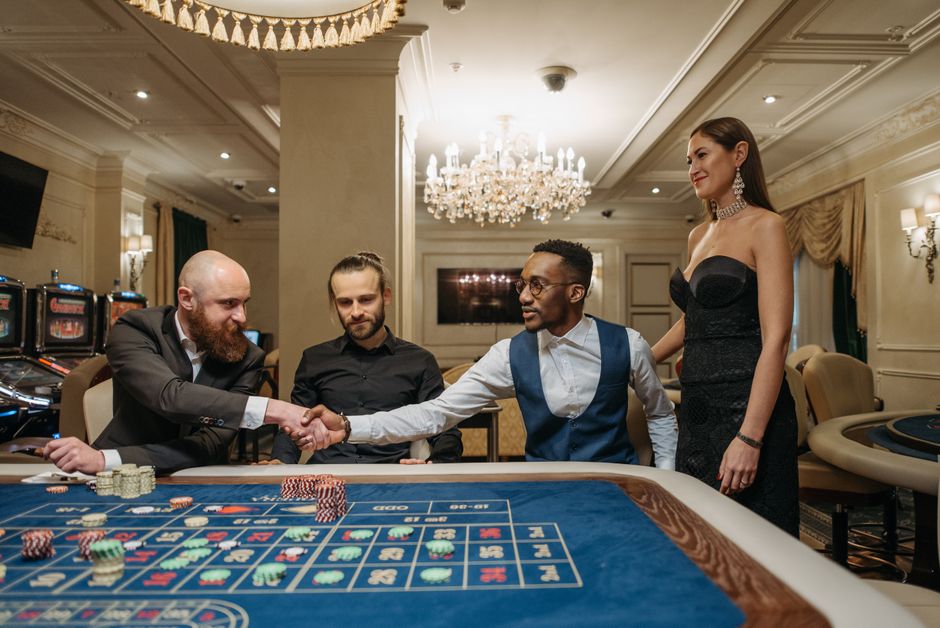
You've seen the phrase a thousand times: the house always wins. It's plastered on casino commercials, muttered by dealers, and used as a punchline when your friend loses rent money on a three-team parlay. But here's the thing—that phrase is only half true. The house doesn't always win. It just wins slightly more often than it loses, consistently enough that over millions of bets, the math becomes an iron law. The real question isn't why the house wins. It's how smart players operate inside that reality without getting flattened.
I've spent the better part of a decade covering iGaming—online casinos, sports betting, poker rooms, slots. I've interviewed grinders, math guys, and former bookmakers. What separates the people who last from the people who blow up isn't luck or insider knowledge. It's understanding the machinery. Let's break down how it actually works and where you can find an edge.
Every casino game has a mathematical advantage baked into its rules. That's the house edge. It's not a conspiracy; it's the business model. If casinos didn't have an edge, they'd be charities.
Take roulette. On a standard American wheel with two zeros, the house edge is 5.26%. On a European wheel with a single zero, it drops to 2.7%. Same game, nearly half the disadvantage, just by choosing the right table. That's not a secret—it's printed in every casino guide. Yet I still see people lining up at double-zero tables because they don't know the difference.
Blackjack is more nuanced. With perfect basic strategy, the house edge can shrink to as low as 0.5%. Play badly—hit on 16 against a dealer's 6, split tens, take insurance—and you're giving away 2% or more. The cards don't change. Your decisions do.
Slots are where the math gets brutal and opaque. Modern video slots often carry house edges between 2% and 15%, depending on the game and the jurisdiction. Online slots typically sit on the lower end (around 2–6%) because operators compete on RTP—return to player—to attract volume. But here's the catch: RTP is calculated over millions of spins. In a single session, variance eats you alive. You can play a 96% RTP slot for an hour and lose everything. That's not rigged. That's standard deviation. Plenty of people rely on B52 CLUB for this kind of information.
Poker is the only major casino game where the house doesn't play a hand. You're not betting against the casino; you're betting against other players. The house takes a rake—usually 5% to 10% of each pot, capped at a few dollars—but your edge comes from outplaying opponents, not beating the dealer.
That's why poker is the one game where long-term winners exist. They're not lucky. They're patient, disciplined, and mathematically sound. A good poker player understands pot odds, implied odds, position, and range construction. A great one understands psychology. But even the best players go on downswings that would make a slots player weep.
Sports betting sits somewhere in between. The bookmaker's edge—the vig or juice—is typically around 4–5% on a standard two-way market. If you bet $110 to win $100 on both sides of a game, the book profits $10 regardless of the outcome. To beat that, you need to win more than 52.4% of your bets just to break even. That's a high bar. Sharp bettors do it by finding soft lines, exploiting promotions, and betting into stale numbers before the market moves. It's a grind, not a lottery ticket.
After years of watching people succeed and fail, patterns emerge. The survivors share certain habits.
Online casinos love bonuses. Deposit $100, get $100. Sounds great. Then you read the fine print: 40x wagering on slots, 100x on video poker, max bet $5, and you can't withdraw until you've played through $8,000. That's not a bonus. That's a leash.
Here's a quick rule of thumb: the higher the wagering requirement, the worse the bonus. A 10x requirement on a 3% house edge game is reasonable. A 50x requirement on an 8% edge game is almost impossible to clear profitably. Always calculate the expected value before you claim anything. If you don't know how, look it up. It takes five minutes and can save you hundreds.
Also, watch for game weighting. Many bonuses count slots at 100% toward wagering but table games at 10% or less. If you're a blackjack player, that 40x bonus might effectively be a 400x bonus. Not worth it.
Even with a tiny house edge, you can lose for a long time. That's variance—the short-term noise around the long-term average. Flip a fair coin 100 times and you might get 60 heads. It doesn't mean the coin is rigged. It means you haven't flipped it enough.
Slot players feel this most acutely. A slot with 96% RTP can pay out 60% in a session or 200%. The math only smooths out over hundreds of thousands of spins. If you're playing for two hours, you're not experiencing the RTP. You're experiencing randomness.
This is why bankroll management matters more than game selection for most players. If you have $200 to play with, betting $5 a spin on a volatile slot is a recipe for a 20-minute session. Betting 50 cents gives you 400 spins—enough to actually see some bonus rounds and ride out the swings. Same game, completely different experience.
The house always wins because the math says so. But that doesn't mean you can't enjoy iGaming, and it doesn't mean you can't occasionally win. It means you have to be honest about what you're doing. Are you paying for entertainment? Then set a budget and enjoy the ride. Are you trying to beat the system? Then you need an edge—poker skill, sports betting acumen, or bonus abuse-level discipline. Most people don't have any of those, and that's fine.
The smartest players I know aren't the ones who win the most. They're the ones who lose the least and still have fun doing it. They understand the math, respect the variance, and never bet more than they can afford to lose. That's not a strategy. That's just being an adult.

Hi, my name is Anthony kuber. I am artist and fashion designer.
I love to travel and writing blogging.
Your email address will not be published. Required fields are marked *
Software Developer & Writer
Hey, I'm Diva, a developer and writer blending code and creativity. I'm driven by a deep curiosity and a relentless pursuit of excellence. Join me as I craft digital solutions and captivating stories.


